Blog
Top 10 Sectors Powering Estonia’s Economy in 2025
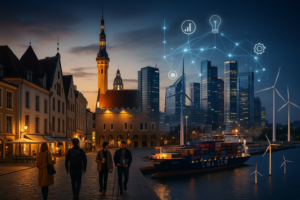 I was just wondering what makes a country stand out on the global economic stage? In Estonia’s case, it is the ability to combine tradition with innovation, heritage with technology, and small-scale flexibility with international ambition. Estonia has built its reputation as a digital pioneer, yet its economy is far more diverse than just tech. Behind the headlines about e-government and startups are energy companies powering the grid, logistics networks connecting the Baltic Sea to Europe, manufacturers producing world-class solutions, and schools preparing the next wave of skilled professionals. Together, these sectors form a complete ecosystem that keeps the country moving forward.
As we all know that the global markets are shifting, competition is increasing, and sustainability targets are redefining how businesses operate. Estonia has responded not by slowing down but by accelerating change. From renewable energy to fintech, from clean technology to education, the country continues to position itself as a model for small nations that want to make a big impact.
This mix of sectors is what gives Estonia strength. Energy secures the foundation, logistics connects the markets, manufacturing drives innovation, ICT keeps systems agile, and education fuels the pipeline of talent. Each sector matters on its own, but their real power comes from the way they connect — like pieces of a larger puzzle. That interconnectedness is Estonia’s advantage.
Energy & Renewable Fuels – Powering the Grid and Beyond
Have you ever thought about what keeps an economy alive when everything else slows down? The answer is energy. Without it, factories stop, offices close, and homes go dark. In Estonia, energy is more than a service; it is the foundation that supports every other sector. In 2025, the focus is shifting from traditional fuel to renewable, sustainable solutions that guarantee both security and competitiveness.
Eesti Energia continues to play a major role as the largest energy company in the country, balancing supply and keeping the grid reliable. But alongside it, companies like Alexela have taken the lead in diversifying sources as they are building biogas plants, expanding solar.
Historically, reliance on oil shale was heavy, but today the pressure of climate targets and EU regulations is forcing change. Instead of resisting, companies are re-investing, modernizing plants, and developing storage technologies. Firms like Skeleton Technologies, though technically part of manufacturing, also play a role here by producing ultracapacitors that help balance energy loads.
The future of Estonia’s growth could depend on whether these energy companies succeed in building a system that is not only reliable, but sustainable. If they do, It would make this amazing country stand out as a model for small nations turning climate challenges into economic opportunities. Energy is indeed the driver that makes everything else possible.
Construction & Real Estate – Rebuilding for Tomorrow
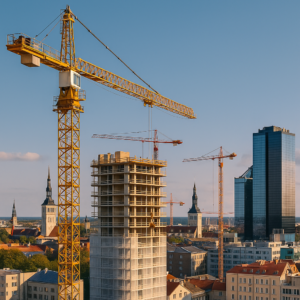 Now the question is how do you modernize while respecting what’s already there? In Estonia, the construction and real estate sector walks that line every day. On one side is the need for modern housing, new commercial spaces, and public infrastructure. On the other is the obligation to preserve cultural heritage, adapt old buildings, and build responsibly.
Merko Ehitus, one of the largest construction firms in the Baltics, plays a central role in shaping Estonia’s urban landscapes. From housing developments to highways and public projects, Merko’s work directly impacts the way people live, move, and work. Their projects are more than just concrete and steel — they create environments that support communities, attract investment, and keep the economy dynamic. Through every project, jobs are created for engineers, architects, planners, and construction crews.
Beyond the giants, firms like XMETALL prove how smaller companies also leave a visible mark. Founded in 2011, XMETALL started with metal construction and has since expanded into pipeline installation and other specialized work. Projects such as welding and installation at the Tallinn Zoo — where they delivered reinforced zinc-coated structures and sliding door systems — show the kind of expertise and flexibility they bring. Companies like this spread economic activity across the value chain, from welders and technicians to suppliers and site managers, while also driving innovation in niche areas that bigger firms may overlook.
Water Utilities & Infrastructure – Clean Water, Trusted Service
Who makes sure the water works — literally — when we need a glass, a shower, or clean streets? In Estonia, this critical task falls on water utilities and infrastructure firms that keep the entire system flowing. It may not be the most visible part of the economy, but without it, daily life and business operations would grind to a halt. Clean water is not just a service; it is a foundation for health, industry, and growth.
Tallinna Vesi, the largest water operator in Estonia, serves more than 460,000 people in Tallinn and Harju County. Its role is simple to describe but complex to execute: managing water supply and wastewater treatment. The company invests heavily in modernizing its infrastructure, ensuring not only that water flows reliably today but that systems remain sustainable for future demand. In a growing urban area like Tallinn, this responsibility carries major weight.
Reliable water systems are especially critical in healthcare and industry.uninterrupted water for patient care. Factories need steady water supply for production. Even logistics and transport hubs cannot run smoothly without basic sanitation and maintenance systems.
Water may not be glamorous, but it is irreplaceable. Its reliability underpins Estonia’s resilience, directly affecting public health, investor confidence, and the country’s reputation as a safe, modern place to live and work. Companies like Tallinna Vesi show that essential services are not about visibility, but about impact. As long as the taps run and the systems hold, the entire economy stands on a firm and trusted base.
Manufacturing & Clean Technology – Smart Production
The answer to solutions that reach far beyond its borders lies in Estonia’s ability to combine traditional manufacturing with advanced technology. In 2025, manufacturing is no longer only about producing at scale; it is about producing smarter, cleaner, and more efficiently. This shift is what makes Estonia’s manufacturing sector stand out, even when compared with larger European economies.
A prime example is Skeleton Technologies which is developing ultracapacitor energy storage systems are used worldwide in transport, grid stabilization, and industrial equipment. What makes Skeleton impressive is not just its product, but its role in shaping the future of energy systems.Alongside Skeleton, Elcogen pushes boundaries with its solid oxide fuel cells. Which generate clean energy for industrial applications, helping companies cut carbon footprints while maintaining strong output. Elcogen shows how Estonia’s manufacturing sector is plugged directly into the global shift towards sustainable solutions. It is not only exporting products — it is exporting ideas, technology, and a model for responsible industrial growth.
Fintech & Financial Services – Digital Money, Real Efficiency
 What happens when money moves as fast as data? The economy flows smoother, and opportunities multiply.that is why Estonia has built a reputation as one of the most digitally advanced societies in the world, and nowhere is this clearer than in fintech and financial services. By combining strong digital infrastructure with bold startups, Estonia has turned financial services into a driver of both growth and global recognition.
Fintech firms in Estonia are scaling fast. They build digital payment systems, lending platforms, and investment tools that compete well beyond the borders of the country. Companies like Bolt, Veriff, and Pipedrive show how local tech can solve global problems — from instant identity verification to managing customer pipelines and on-demand transport payments. These companies prove that Estonia is not just a participant in the fintech revolution; it is one of its accelerators.
A major advantage is Estonia’s digital-first environment. The e-residency program allows entrepreneurs worldwide to set up and run companies remotely, using Estonia’s infrastructure for banking, tax, and compliance. This attracts businesses, freelancers, and startups who want efficiency without borders. It also reinforces Estonia’s brand as a hub where finance meets technology in a seamless way.
Traditional banks still carry much of the weight, but they have adapted to the digital shift. SEB, Swedbank, Nordea, LHV, and Coop Pank are not only serving legacy industries; they are also supporting tech firms and startups with capital, advisory services, and digital products. Their involvement ensures that even the most innovative companies can rely on solid financial systems to grow. Together, fintech and traditional finance create a balanced ecosystem that is both stable and forward-looking.
Fintech in Estonia has now become an essential pillar of the economy which blends speed, security, and global accessibility, giving Estonia a competitive edge that few countries of its size can claim. As money becomes more digital and more mobile, Estonia is already proving that efficiency in finance can translate directly into efficiency across the entire economy.
ICT & Digital Infrastructure – Beyond Tradition
By now you should be asking what makes Estonia one of the world’s most digital-first nations? This could be a result of decades of investment in infrastructure, forward-looking policies, and a culture of agility which it made the decision early to embrace digital transformation, and today that choice has paid off. ICT is no longer a supporting sector; it is one of the pillars of the national economy.
Information and communications technology contributes around 8% of Estonia’s GDP, a remarkable figure for a country of its size. It powers e-government systems that are recognized worldwide, ensuring citizens and businesses can manage services online with speed and transparency. From digital schools to smart healthcare platforms, ICT has made daily life easier, faster, and more reliable,which has also given Estonia a brand identity
From fintech apps to cybersecurity solutions, the availability of secure, agile systems means that businesses can focus on innovation without being slowed down by bureaucracy. ICT is the ground they stand on.
This digital backbone also improves other industries. Energy grids run smoother with smart monitoring. Logistics is more efficient with digital tracking systems. Financial services integrate better because of the national ID and e-signature solutions. Even education and tourism benefit from strong digital tools. Every sector — whether traditional or modern — runs more effectively because ICT strengthens its base.
Other countries are still debating how to transform their services, while Estonia is already pushing into new areas like artificial intelligence, cybersecurity, and blockchain. ICT here is more than infrastructure — it is a mindset. It proves that a country does not need size to lead; it only needs clarity, commitment, and the courage to build beyond tradition.
Education & Talent Pipeline – Growth Engine
I have had the chance to delve deep into what keeps every sector alive when technology changes fast and industries demand more skills? The answer is education. In Estonia, the education system and talent pipeline form the foundation that allows businesses to grow. No matter how advanced the industry, it cannot run without the right people. Education ensures that knowledge is renewed, skills are updated, and opportunities remain open.
Schools play the first role by preparing young people with the basics — digital literacy, problem-solving, and communication. From an early age, Estonian students learn how to use digital tools, setting them apart from many of their European peers as well as the building a confident generation ready to adapt to new challenges, whether in technology, science, or business.
Universities and higher education centers extend that foundation into specialized skills. Programs in ICT, engineering, business, and life sciences attract not only Estonian students but also international talent. Institutions like the University of Tartu and Tallinn University of Technology feed industries with developers, engineers, researchers, and managers who are ready to contribute

immediately. Their research departments also link academia with industry, sparking innovation that feeds directly into the economy.
As industries change, workers must adapt. Short-term bootcamps, digital skills programs, and vocational training ensure that older sectors like logistics, construction, and manufacturing remain competitive. This system helps avoid skills gaps that could slow down growth. It also gives employees the confidence that they can stay relevant throughout their careers.
The talent pipeline is more than just education — it is an engine of economic resilience. By feeding industries with new talent and adapting older skills to new demands, Estonia proves that human capital is its most valuable resource. No sector can outpace the talent that fuels it. As long as Estonia continues to invest in education and skill development, its economy will have the strength and creativity to keep moving forward.
BOTTOM LINE
So now I would leave you with the fact that many engines working at once. Energy companies keeping the grid alive. Builders shaping the cities of tomorrow. Logistics connecting us to Europe. Manufactures turning small ideas into global solutions. Food and agribusiness keeping people strong. Fintech and ICT pushing forward at digital speed.Education feeding it all with talent.
This mix is what makes Estonia strong in now— resilience from tradition, power from innovation, and speed from digital systems.The future belongs to nations that can act fast, adapt faster, and never run out of skills. Estonia proves every day that size is not the limit — mindset is. And with these ten sectors moving together, the message is clear: Estonia is not waiting for the future. Estonia is building it.
Leave a Reply